Why Are My Teeth Yellow? Common Causes of Tooth Discolouration
Have you noticed that your teeth look more yellow or stained than they used to? Tooth discolouration is common and can happen for a number of reasons. While some staining can be improved with professional teeth whitening, the best approach depends on what is causing the discolouration in the first place.
Understanding the different causes of tooth staining can help you determine what may be contributing to changes in your smile.
Why Do Teeth Become Yellow or Stained?
Teeth can become discoloured for several reasons. Some are related to everyday habits, while others can be associated with changes within the tooth itself.
1. Coffee, Tea and Other Dark-Coloured Drinks
Coffee and tea are common contributors to tooth staining. These beverages contain compounds called chromogens and tannins that can contribute to surface discolouration over time.
Other drinks, including red wine and some dark-coloured soft drinks, can also contribute to staining.
If you regularly consume these beverages, rinsing your mouth with water afterward may help reduce the amount of staining that builds up on your teeth.
2. Certain Foods
Some foods can contribute to surface staining, particularly foods with strong pigments.
Examples include:
-
Berries
-
Tomato-based sauces
-
Soy sauce
-
Curry
-
Balsamic vinegar
You don't necessarily need to avoid these foods. Maintaining good oral hygiene and rinsing with water after eating can help minimize the effects of staining.
3. Tobacco Use
Tobacco products can contribute to noticeable tooth discolouration. Nicotine and other substances found in tobacco can cause teeth to develop yellow or brown staining over time.
Tobacco use can also affect your overall oral health, so speak with your dental team if you have concerns about staining or other changes in your mouth.
4. Natural Changes as You Age
Teeth can naturally appear more yellow as we get older.
Underneath the hard outer layer of your tooth, called enamel, is a naturally yellowish layer called dentin. As enamel becomes thinner over time, more of the underlying dentin may become visible.
This means that some tooth discolouration is a natural part of aging and isn't necessarily caused by poor oral hygiene.
5. Plaque and Tartar Buildup
Inadequate removal of plaque can contribute to buildup on the teeth. When plaque hardens into tartar, it cannot be removed through regular brushing and flossing alone.
Tartar can appear yellow or brown and may contribute to the appearance of stained teeth.
Regular dental cleanings can help remove tartar and other buildup that you cannot remove at home.
6. Poor Oral Hygiene
Brushing twice a day and cleaning between your teeth are important for maintaining a healthy smile. When plaque isn't removed regularly, it can accumulate and contribute to a dull or discoloured appearance.
Good oral hygiene doesn't necessarily prevent all tooth discolouration, but it can help reduce the buildup that contributes to surface staining.
7. Certain Medications or Dental Conditions
Some types of tooth discolouration develop within the tooth rather than on its surface. This is sometimes referred to as intrinsic discolouration.
Certain medications, dental injuries, and conditions affecting tooth development can contribute to changes in tooth colour.
Intrinsic stains may not respond to whitening products in the same way as surface stains. A dental professional can assess the type of discolouration and discuss appropriate options.
Why Are Some Teeth More Yellow Than Others?
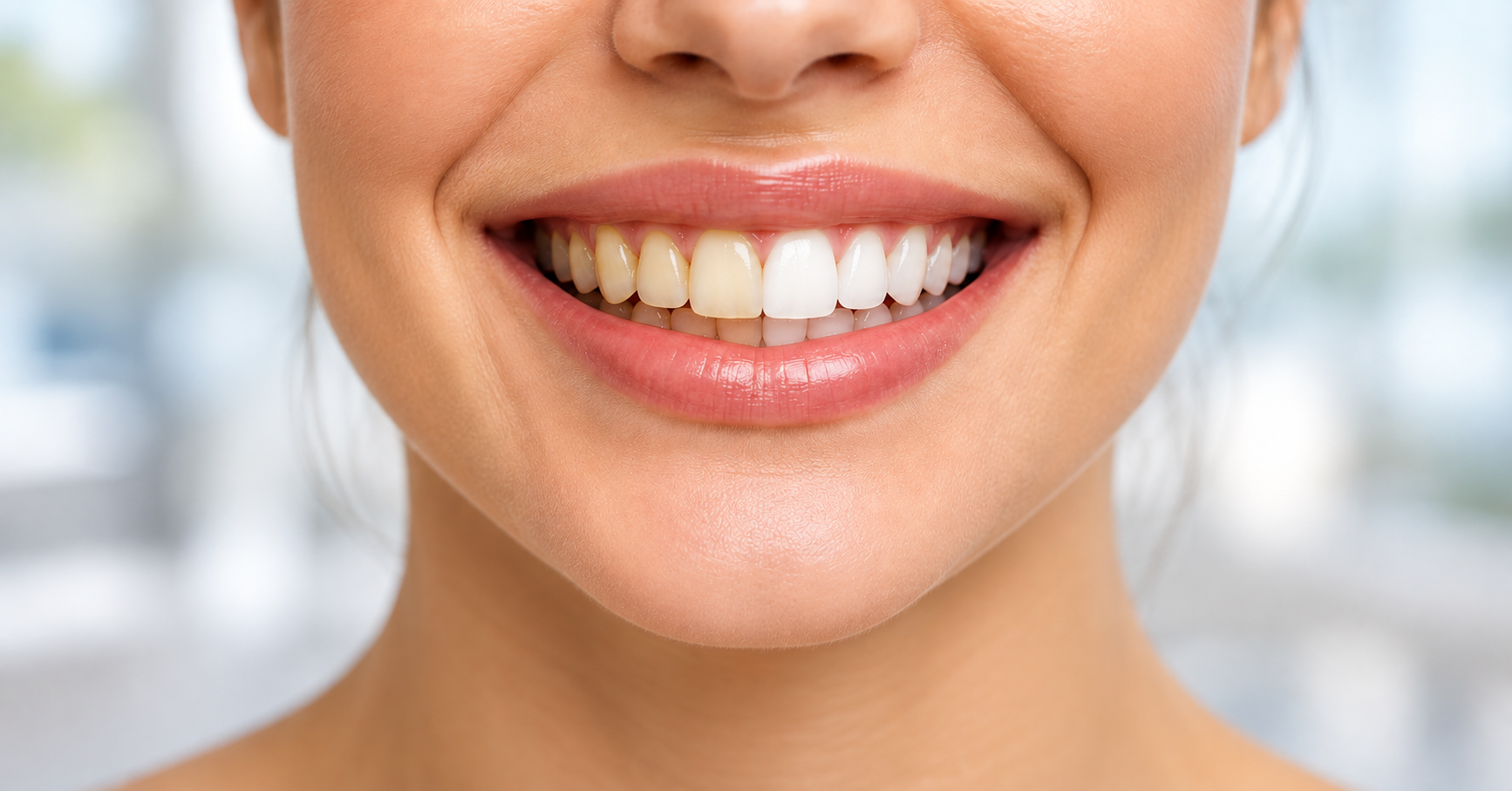
It's normal for teeth to vary slightly in colour. Genetics, enamel thickness, age, diet, oral hygiene habits, and lifestyle can all play a role in how your teeth look.
It's also possible for individual teeth to appear darker than the teeth around them. If you notice a sudden or significant change in the colour of one tooth, it's worth discussing with your dentist.
Can Yellow or Stained Teeth Be Whitened?
In some cases, yes. Professional teeth whitening can help lighten certain types of tooth discolouration, particularly stains that have developed on the surface of the teeth.
However, whitening does not work equally well on every type of stain. Dental restorations such as crowns, fillings, veneers, and bridges do not respond to whitening in the same way as natural tooth structure.
Before whitening your teeth, a dental professional can assess your teeth and gums and help determine whether whitening is appropriate for you.
How Can You Help Prevent Tooth Staining?
While some tooth discolouration is a natural part of aging, there are steps you can take to help reduce surface staining:
-
Brush your teeth twice a day with fluoride toothpaste.
-
Clean between your teeth daily.
-
Rinse your mouth with water after consuming foods or drinks that may stain your teeth.
-
Keep regular dental examination and cleaning appointments.
-
Avoid or limit tobacco use.
-
Follow your dental professional's recommendations for whitening and oral care.
When Should You Talk to Your Dentist?
If you're concerned about yellow or stained teeth, a dental examination can help identify what may be causing the discolouration.
A dentist can determine whether the colour change is related to surface staining, natural changes in the tooth, tartar buildup, or another underlying concern. They can then discuss options that may be appropriate for your smile.
Ready to Brighten Your Smile?
If you're interested in improving the appearance of stained or discoloured teeth, speak with your dental team about your options. Professional teeth whitening may be an option depending on the condition of your teeth and the type of discolouration present.
Contact Crestwood Dental Clinic to book an appointment and learn more about teeth whitening and other options for improving your smile.